
(Joint post with Olaf Lewitz)
Essence of Kris
Imagine your ideal organization.
We may think of the organizational culture as the “personality” of the company.
What is the personality of this organization?
Culture is Aggregate Identity
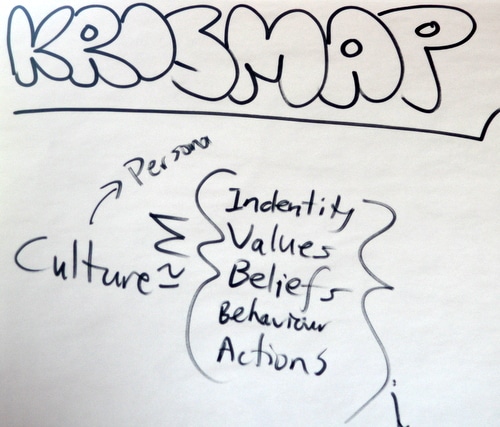
Organizational Culture is the emergent aggregate identity of all her people.
Some questions to help you think about Her Persona:
- What is the organization like?
- What does she like?
- What does she want?
- What does she feel?
- What does she look like?
- How does she behave?
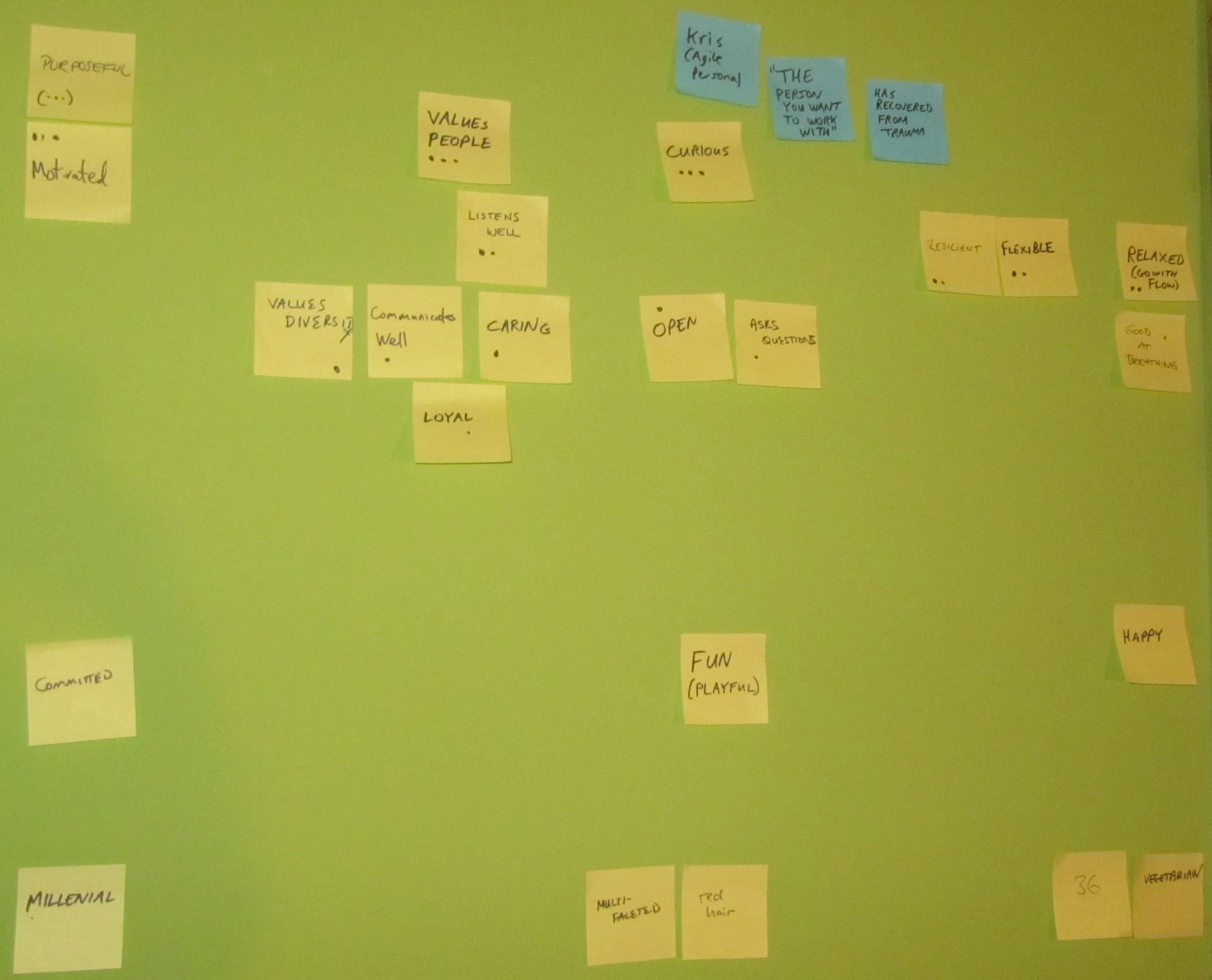
Kris (Agile Persona) is purposeful, curious and values people
- Values People: listens well, is caring and loyal
- Curious, Open and Playful
- Resilient and Flexible
- Relaxed, Happy
- Purposeful and motivated
See below photo for our very first Agile persona – Kris.
How to run the KrisMap Workshop
- Briefly explain concept of culture and personas.
- In small groups, brainstorm key personality attributes of persona. (Remember to name her).
- After cluster, select key or salient features.
- (Do not prioritise, everything might be essential. Encourage to write more attributes and add them if no one objects.)
- Share with large group. (Keep adding attributes as people get more inspired.)
Debrief
- Would you want to work with Kris?
- Would you want to hire Kris?
- Is Kris attractive to customers?
- Do you find any attribute of Kris that cannot be learned?
- (if an attribute is identified as being hard to achieve, ask if it might be easier if you have a team to help you)
- Is it your organization’s goal to be like Kris?
- Do you aspire to be like Kris?
- What examples for Kris’ attributes do you find in your current org? Share stories.
Our Key Observations/Learnings
- Kris is an aspirational model — no one can actually be Kris.
- Everyone can learn. Some attributes are easier than others. Teams help. Coaching helps.
- Diversity in the team/organization allows Kris to emerge. Not every member of an organisation needs to (or should) have all of the map’s attributes…
- Transformation of an organization occurs through the transformation of individuals.
- Transformation needs to start with the leadership team.
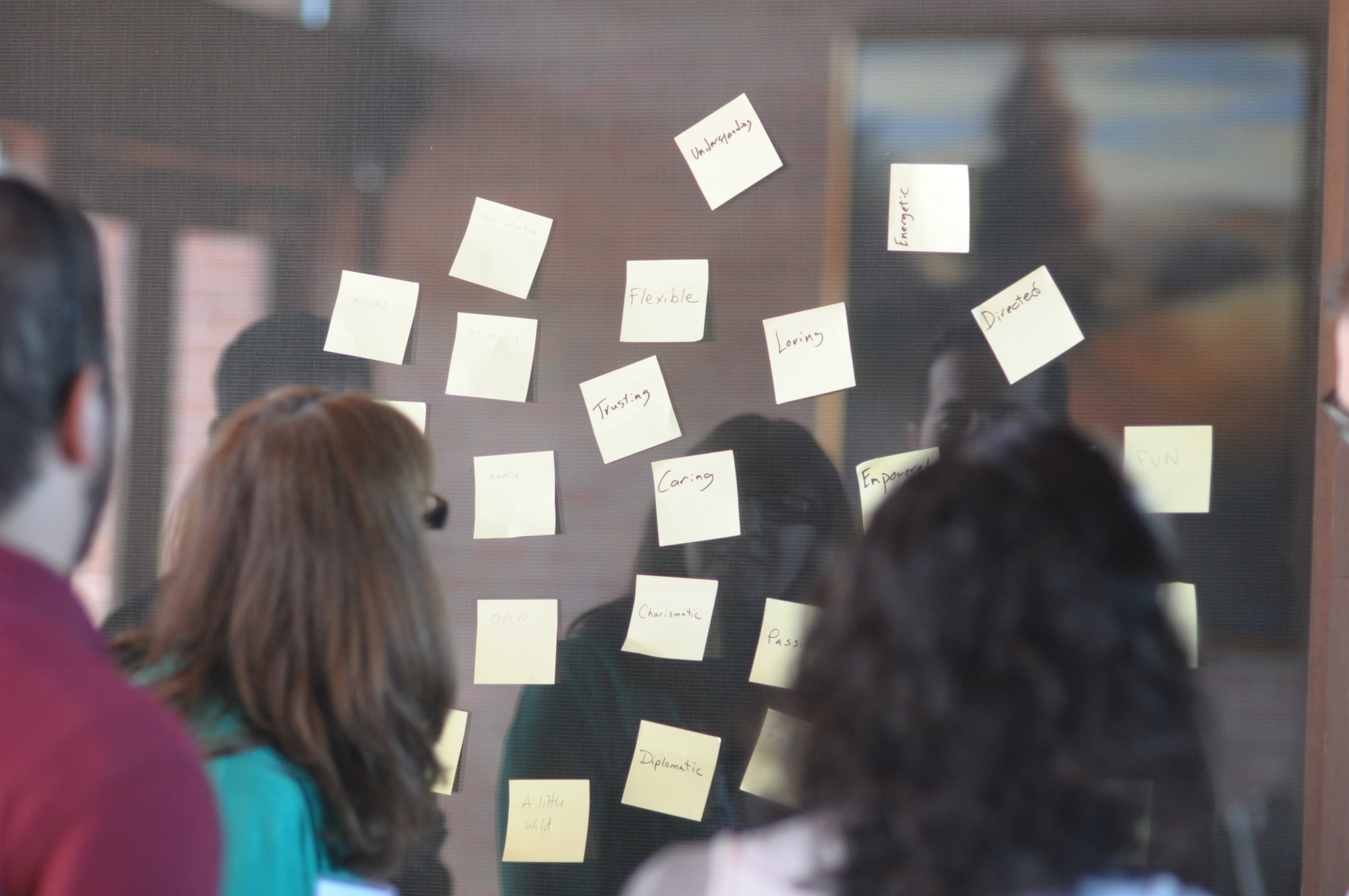
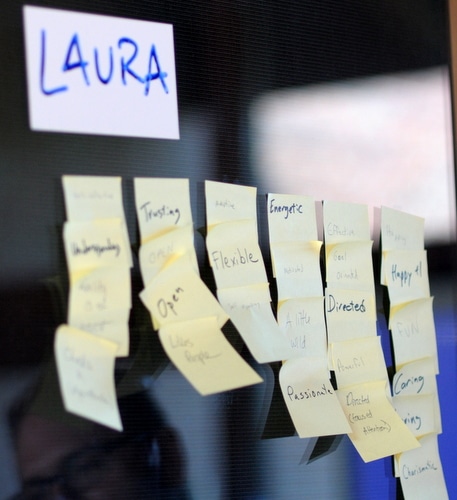
Laura is energetic, caring and effective
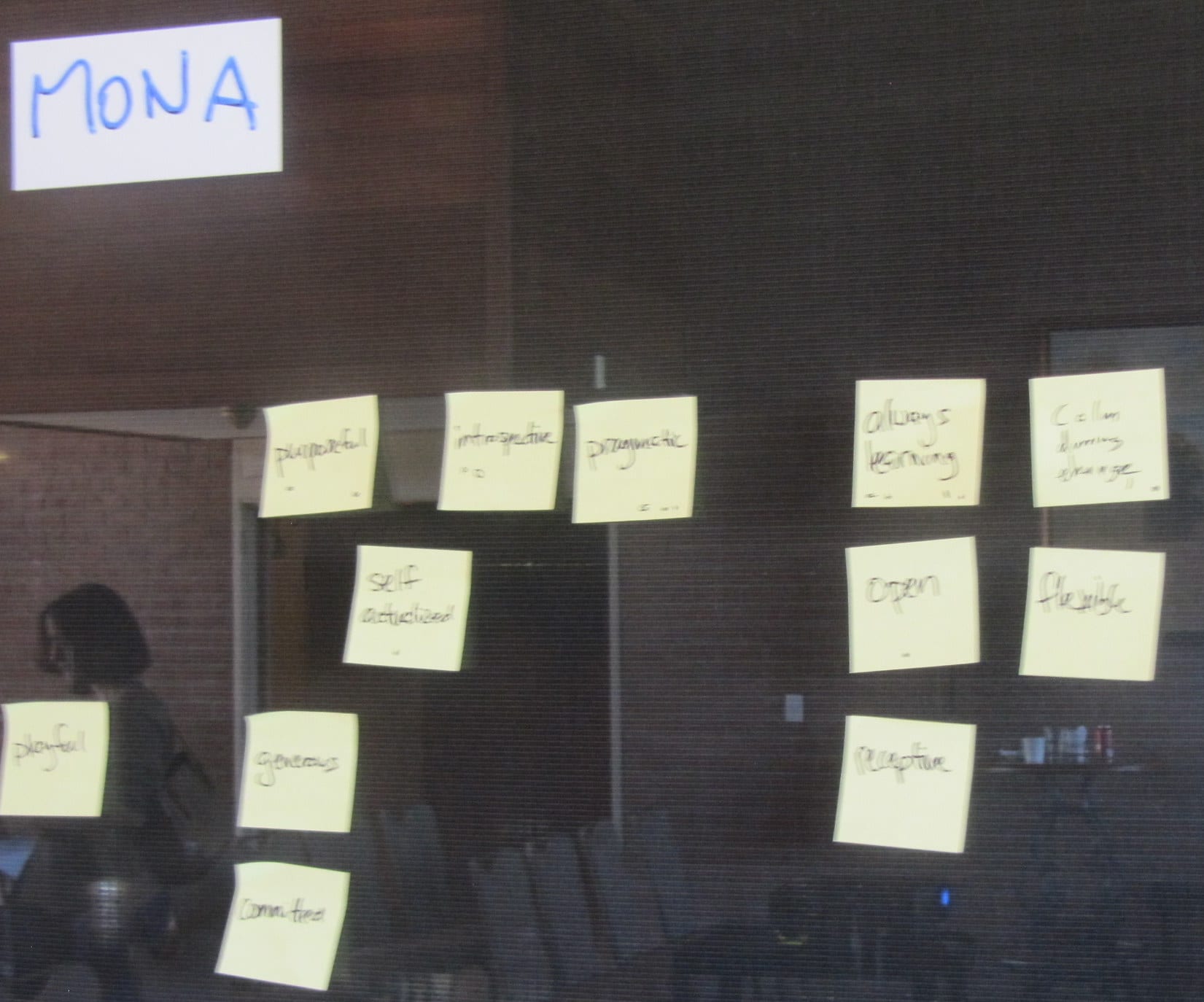
Mona is purposeful, pragmatic and always learning
How To Use This
Do this exercise with your leadership team, frame the question as “How would you love your organisation to be?”
No organisation can grow, transform or flourish faster than their leadership team and, ultimately, their CEO (given you have a hierarchical structure).
We found in five sessions that all participants agreed that all their wanted attributes can be learned. They all agreed that this learning will be easier and faster in a team. They all ultimately wanted to be that persona that they had created, they identified it as an aspirational model to strive for. A personal vision they can align with and focus on.
To ground the group (which might feel like they entered a dream state of mind during the exercise and ask puzzled questions like “how do we start to make that happen?” ask them for one more step:
Try to remember stories that happened in this very organisation where someone has shown some attempt at the behaviour you now wish you’d see. Find examples of learning, pragmatism, experiments, care, unusual effectiveness, appreciation… (use your own persona’s attributes, of course.) Let them see for themselves that the behaviour they want is already possible in the current state of the organisation, is already present in its DNA.
A Want is a baby Have…
(Michele & Jim McCarthy in Software for your Head)
Acknowledgements
“There is no Organization!” by Ari-Pekka Skarp got Olaf started to rethink his concept of organisation. Bob Marshall pushed him further in “There is no Organization, but…” which in the comments discussion inspired the idea of collaboratively creating an organisation’s persona.
At the Agile Influencers of DC meetup Michael and Olaf ran an experiment out of which this session design emerged with the help of Paul Boos, Andrea Chiou, Ken Furlong and Tucker Croft.
We re-ran the exercise at CultureCon in Philadelphia and AgileCoachCamp in Minneapolis (Laura & Mona), with great feedback (“May I use this?”) and at a first client. Thank you to all who created the context for us to emerge this.
And, yes, you may use this. Please tell us of your results.