10 Things Executives Need to Know about Agile

Slide deck with the top 10 things executives need to know about Agile:

Here’s the list with some handy links:

  1. Agile Is Mainstream
  2. Many Benefits from Agile
  3. Agile is not a Silver Bullet
  4. Agile Fails Due to Culture
  5. Agile Differs from Most Company Cultures
  6. Most Value Comes from Mindset/Culture, not Practices
  7. Adopt Agile Practices that fit Culture (Option 1)
  8. Change Culture through Organizational Transformation (Option 2)
  9. Culture Mismatch will Slow and Ultimately Fail Your Agile Initiative
  10. Culture Eats Strategy for Breakfast

Of course, it is fine to proceed with either option – adoption or transformation – it’s about what is the best fit for the client environment and their wishes.

There are two conversations around transformation that this deck is designed to trigger/encourage:

  • What does break-through organizational culture look like?
  • What does organizational transformation look like?

My Favourite Slide in the Deck

Benefit of Practices vs Culture

Acknowledgements

I would like to thank the hundreds of people who have attended my workshops and talks over the last two years to help clarify and refine this message.

Print Friendly

Leave a Comment

How Change Initiatives Damage Organizations and Fail

Change Initiative - ForcesA simple (and misunderstood) way people think of their change initiative like this:

Their organization is just sitting there, ready to change in wonderful ways. We just have to tell people how great our new initiative is and they will be lining up to learn more and make things happen. Right?

Unfortunately, organizations are complex adaptive systems with their own dynamics and forces at play.

Note: we could be talking about the whole organization, a group, or a team here.

Forces Acting on an Organization

In the following diagram, I will use the word Culture to capture the existing forces at play in an organization. The real situation will be of course much more complex with various attractors influencing the system in different ways, but this will reveal the essence of what I have seen with change initiatives around Agile.

Forces on Org Change


Some remarks on the diagram:

  1. It is difficult for a change initiative to make real progress if it runs against the culture of the organizations (as is usually the case with Agile). It’s like trying to roll a giant boulder up hill.
  2. When forces pull an object in different directions, the object is under tension. Too much tension and the organization will be damaged (red squiggles). So, when you notice resistance, applying more force will damage your organization. A few weeks ago, this simple explanation helped a client reduce tension by shifting the blue rather than adding more green.
  3. The change initiative will eventually fail. Why? Energy is required to keep the change initiative going. Eventually, people will just declare victory or give up and move on to the next initiative. At this point the boulder rolls down the hill, crushing supporters of the initiative on the way.

Rolling Rocks Downhill

Rolling down hill - culture A much better way to go about this is to forget about change strategies and work on an organization’s culture so that it moves the organization towards the desired outcome without conflict. This is of course a vastly simplified version of reality, but it helps us stop and consider the root cause of dynamics and forces in an organization.

Acknowledgments

There is a great exercise on force-field analysis called “May the Forces Be With You” that I learned from The big book of humorous training games.

Olivier Lafontan wrote the insightful post Being an Agile transition coach feels like Sisyphus that inspired the boulder in my narrative.

The phrase “Rolling Rocks Downhill” came to mind from Clarke Ching’s new book by that title.

Print Friendly

Leave a Comment

Organizational Transformation Checklist

In this post I am sharing workshop results on how to understand the readiness of the leadership to undertake organizational transformation such as the intentional upgrade of the cultural operating system. It is partly a checklist and partly a diagnostic tool to understand current perceptions.

In his seminal work, John Kotter identifies a Sense of Urgency as the key first step to any major change initiative. Success requires that “75% of a company’s management is honestly convinced that business as usual is totally unacceptable.”

In this post, additional considerations are considered.

Transformation is #1 Organizational Priority

In addition to Kotter’s remarks we add the following litmus test for undertaking transformation.

Transformation - Litmus Test

A common symptom of failure is that transformation or improving culture is listed as the fourth bullet point in the yearly objectives.

Leadership Team Readiness Checklist

What follows is one readiness checklist to assess whether the leadership in an organization is really ready. The text in blue indicates activities that can support a leadership team in understanding where it stands on each item.

Transformation - Readiness Checklist

Red Flags is a term from Good to Great where great companies have hope and faith to see the red flags or difficult truths.
Red Pill is a term from the movie the Matrix that denotes the willingness to explore disconnects in our belief system to understand the true and perhaps discomforting reality.

Dear leaders, how are you doing?

The following diagram shows a set of diagnostics that can start a real discussion around the perception of the current state of the organization. It is intended to be used for one or more people to put an “x” on the line indicating where they see that aspect. The scale increases from left to right with either a rating of 1 to 10 or from ☹ to ☺

Readiness Questions- Dear Leader


The astute reader will notice the last question is not a scale, but an open-ended exploration called My Worst Nightmare.

Acknowledgements

I would like to thank the participants in this session including Don Gray and Claudia Melo. I would also like to acknowledge the financial contribution of the Agile Alliance for sponsoring this workshop through the Supporting Agile Adoption Program.

Print Friendly

Leave a Comment

How to Build a Culture Bubble

The post is about how one can create a bubble of a new culture inside of an existing organization. For example, this may be used by a group interested in developing an innovation and learning culture inside a typical bureaucratic organization. This post is a continuation of my earlier post on how to Build Culture Adapters to Avoid Agile Failure.

I realized that I have drawn the diagram below dozens of times with clients, prospects and colleagues over the last year and realized other people may be interested in it.

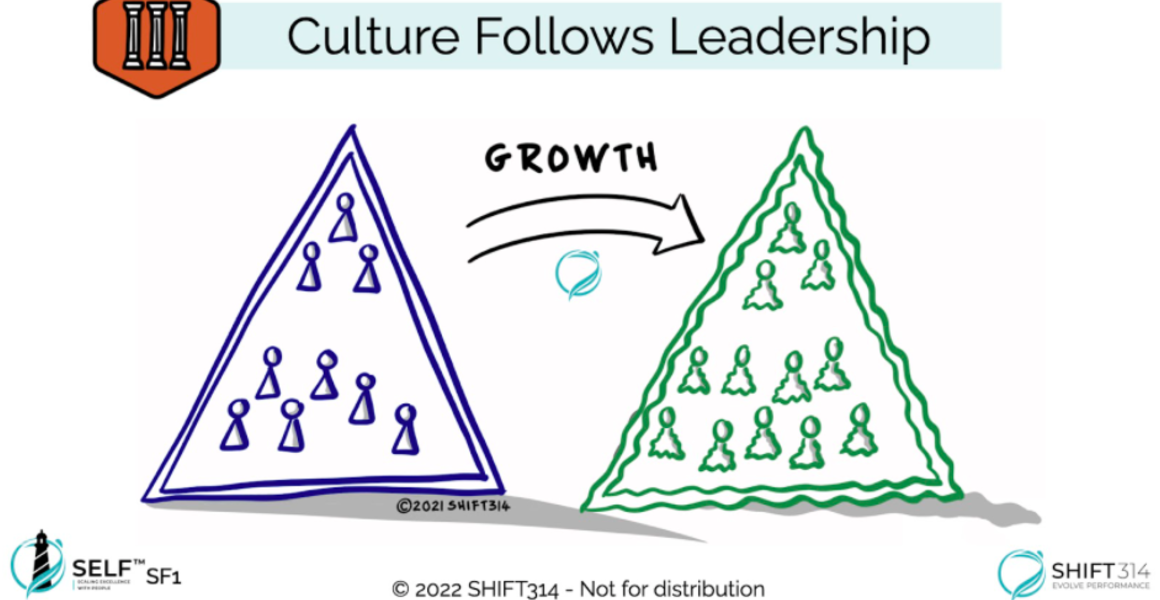
The drawing below shows the hierarchy of a typical organization with a dominant culture (in blue) and a new culture bubble formed (in green).

Leader growing different culture in org hierarcy

Given the nature of a power hierarchy in traditional organizations, a leader/manager can induce a culture shift in the organization that reports into her. See Transformation? Leaders Go First! for an explanation of how leaders can support a transformation process.

It is of course, critically important to build adapters around your bubble so that it can safely interface with the rest of the organization and avoid trigger the attack of organizational anti-bodies.

A final comment is regarding the cooperation of partner groups (in light blue) that are tightly bound to the same customer value stream. The close cooperation required for success necessitates a higher level of alignment. This means that the partner group must either help lead the culture change (and go green) or at a minimum be neutral (as show in light blue).

In a software context, a very tight relationship exists between the product and development groups since they need to work together to create customer value. A common pattern is for the green bubble to be the development and the blue bubble to be product.

When and How to Use This Diagram

I typically draw this picture and provide this explanation when socializing alternative approaches to Agile. In virtually all cases, the change agent leading the Agile initiative is not the CEO and does not have a span of control or influence over the whole organization. It is usually the case that typical “modern” management practices are in place that are regressive and hostile to fostering an Agile culture. So most leaders have the option of sticking to the adoption of practices that are consistent with the existing organizational culture or undertake a transformation of their group to realize a new culture that is supportive of Agile.

It is of particular importance, that as an external change artist, we are fully respectful of our client’s wishes and intents. It’s their organization after all. For some coaches this means letting go of the dream of helping the organization move forward on the road towards an Agile mindset – or “real” Agile.

Related Work?

Some time ago I shared George Schlitz and Giora Morein’s Agile Enablement Battlefield model to help understand how a transition is progressing. I am no longer a big fan of the metaphor of war, however, the notions of “fog of war” can be helpful. As well, I have seen increasing danger and harm caused by wolves in sheep’s clothing. These are the folks who say they are on board and go along with changes, but resist in passive ways. Of course, this is a natural and understandable response to coercion. If we really want to change our organizations then coercion is a tool that we need to leave behind.

Acknowledgments

The basic ideas of managing gaps in culture comes from William Schneider’s book How to Make you Culture Work. Many thanks also to all the various workshop participants who validated that these patterns apply.


Print Friendly

Leave a Comment

Build Culture Adapters to Avoid Agile Failure

The purpose of this post is to explain why building culture adapters around at team or group is a good idea. It is important for me to revisit this topic from my book and conference presentations since I have learned something new and wanted to share it. All but the last section is an excerpt from my book.

It is by now well known that Agile is a mindset and culture system and that it is incompatible with most organizational cultures.

Let’s talk about one way of moving forward with Agile – building adapters. This is an effective approach when the span of control and influence of the leadership does not cover the whole of the organization.

Start with A Successful Agile Team

A very powerful way to think about introducing a foreign culture such as Agile to an organization is through a cellular model. Consider a successful transformation of one team or group to Agile. This may have been a special pilot project with all the people keen to do Agile.

Imagine that the team is very excited about the new way of working. The team exists in the context of some other culture.

Team+Culture - 1 Cell adaptor Model

The team is not that excited about all of the organizational barriers and limits on productivity and success. So, what typically happens is they start to push back on the needs and requirements of other groups that are not adding value to the team and to the customers.

Attack of the Organizational Antibodies

The result sounds like a B-movie: “Attack of the Organizational Antibodies!” In the human body, we have antibodies (Killer T-Cells) that are designed to eliminate foreign elements to keep us healthy. In a similar way, organizations will react to the introduction of a foreign culture system such as Agile. These are the elements that work hard to preserve the status quo.

Team+Culture - 2 Anti-bodies

Build Culture Adapters

The movie doesn’t have to have a bad ending. One common pattern is to build adapters or translators around the foreign culture so that it fits within the overall culture. These are depicted in the diagram below as shapes surrounding and protecting the team. In this situation, the adapter allows the team to blend in with the overall organizational culture and avoid triggering the antibodies.  It looks like this:

Team+Culture - 3 Barriers + Adapters

In practical terms, the adapter could take the form of a Microsoft Project Plan that has no value to the customers or team but is required by the organization. Another might be team use of a peer-based review for merit increases that still gets submitted by the manager since the system requires input only from her.

This sounds like a lot of effort! Is it worth it? The value is equal to the benefits derived from Agile less the cost of adapter maintenance. Assuming there is good value in the team’s new state of functioning, then sadly some of that productivity will be lost maintaining the adapters. But this is a much better situation to be in compared to getting attacked by organizational antibodies. The adapters are part of the cost of doing business. Like taxes.

Lean differentiates between different types of waste in organizations. Type I Muda (waste) are non value added tasks that are required at the current time. Type II Muda are non value added tasks that can be removed immediately. Maintaining the adapters is type I since the environment requires them.

The model above points a way to success with Agile transformation – it is possible to transform one team or group provided that care and attention is provided to satisfying the requirements of the larger organization. It is a feasible strategy to consider this a first step before a wider organizational change initiative.

THIS WILL EVENTUALLY FAIL!

The adapter strategy is not sustainable in the long term. Why? Eventually, the manager of this group is going to leave and a new manager will be selected. The new manager will typically be chosen to reflect the host organizational culture and will become a powerful attractor for the host culture. An then Agile gets dissolved or neutered. And the people who love working in this new way to deliver great products quit the organization and go work somewhere else.

At a number of conference presentations, I presented the arguement that no responsible manager should undertake using this pattern since it is ultimately doomed to failure. And this is my mistake. I was wrong. Sorry.

But that’s Good! (My New Insight)

I was at a client earlier this year and this topic came up. As I have been working very hard on supplicating and having compassion for the organizations I coach, I noticed something interesting. This particular organization was focussed on short term results and not long term results. (Yeah, I know this is a losing strategy but it’s their culture not mine). So, in the context of their organizational culture is was not only acceptable but highly desirable to do something that will work in the short run but fail in the longer term. So, if you are a manager in an organization that is fixed on short-term results, then the adapters are a truly great strategy to use with a clear conscience. Happy trails.


Print Friendly

Leave a Comment

Connecting the Dots on Agile, Org Culture, Personal Growth & Temenos

A friend of mine asked me what is going on with all this touchy-feely people and personal growth stuff – “What’s it got to do with Agile?” My answer: everything! So this post ties together: Agile, High-Performance Culture with People skills and Temenos Workshop among others.

Here is my current roadmap of focus areas related to rebooting organizational culture:

Culture Reboot Roadmap


The arrows indicate support. For example, People Skills such as communication models lead to Relational Flow where people trust one another and are emotional supportive. This in turn leads to or supports High Performance Culture.

High Performance Culture is the Goal, but Need to Focus Elsewhere

My goal is to help organizations develop high performance culture through the creation of environments where people can bring their best every day. We can see there are a variety of things to focus on that will lead to support this goal.

Let’s take meditation as an example. There is no direct connection to high performance culture – it’s indirect. But in my experience it is 100% relevant and salient for bringing about a sequence of changes that support the goal. So, we need to focus on the things that will lead to a great culture and the ensuing results. Of course, there are many routes and practices – so nothing is mandatory: meditation works for me, but you may have an alternate route to personal growth.

This is not an exhaustive map of all the elements that lead to High Performance Culture – for sure there are lot’s of things we could add. My purpose in creating and sharing this is to create a call to action to focus on these or related elements so that we can really help organizations succeed.

Examples of Posts on these Topics

My hope is that you are curious about some of these content areas, so I will share some of my blog posts for further reading.

What is High-Performance Culture?

Relational Flow

People Skills

Personal Growth

Organizational Transformation

Transformational Leadership

Temenos Workshop

Print Friendly

Comments (2)

Temenos: Containers for Growing Relationships

“If we’re serious about exploring the world around us, we have to explore the world within us.” - Ken Robinson

(Joint post with Olaf Lewitz - Temenos Series)

The Temenos container provides a powerful mental model for understanding and improving relationships with others.

Often we do not consider the larger context of the situations we are in. When we explicitly look beyond the specifics of a conversation or interaction to the relationship itself, we may more easily achieve relational flow.

We use the term container to talk about the underlying fabric of our relationship with another person. The same notion can be used to understand groups we are part of as well as our relationship with ourselves.

Consider the diagram below illustrating how containers may be used. For example, we may wish to imagine our vision for the relationship, the baggage of our history or the roles we play.

Temenos Container


Roles We Play

Dave Snowden has frequently pointed out that one specific dimension of the complexity of human systems is our ability to change roles (containers) from one second to the other. For example, when my wife calls me at work my role changes from colleague to husband. One set of beliefs, principles and values is replaced with another, potentially conflicting one.

Each role we play applies to a specific context. We share most of these contexts with other beings. A container is the Temenos term to talk about these specific contexts. Within these containers we evolve the different roles we play in life.

When we consciously examine our containers we can evolve the roles we play. Or evolve ourselves so that we behave the same across containers – to our true authentic self.

What is a Temenos?

Temenos is a Greek word for a transformational container, such as a separate piece of land dedicated to a king or god. It is a contained space of spiritual importance. With Temenos we hold all our containers as a sacred enabler to connection and relation with other human beings.

The focus of this post is on the use of the container in the context of a relationship with another person and with ourself. The creation of a transformational Temenos container and how to leverage symbols of transformation will be the subject of another post.
Containers In Our Lives
In the history of our lives, these containers are formed: shared spaces for ourselves or others, each of which defines a unique identity (the role we play), unique habits we acquire, and adds specific emotional baggage to the load we carry around in our lives.

We spend our lives in different containers. Each of them helps us to grow and be more of ourselves. For every container, we have needs that we want fulfilled and expectations we feel obliged to fulfill. Every time those needs are not met (or we think we don’t fulfill the needs) we are hurt: we think we fail the container or the container fails us. Some examplesy of such containers:

  • Our self. This is the most important and challenging container for each of us.
  • The family we grow up in.
  • The friends we make, and lose, over the years.
  • Teams we join, and leave, workplaces, clients…
  • People who die.
  • Relationships we start, and finish.
  • Our children, the mutual unconditional love that challenges us and makes us whole.

All of these relationships, the roles we play in these and how they affect us can be framed as containers:

  • Containers we join (some deliberately, some by chance)—born into a family
  • Containers we leave (or that leave us)—divorce, death
  • Containers we enter—coming home from work
  • Containers we exit—leaving home for work

Olaf’s Story

When I created my first influence map and reflected on the containers which have been important in my life, I noticed I had unconsciously (though still deliberately) removed roles from my portfolio. For example, the relationship to my parents had transformed into a mutual friendship on eye level; same with my brother. I had effectively stopped acting as a son, and brother. Don’t get me wrong: we didn’t break up, the relationship became closer. Its quality had changed, and I noticed that not playing these roles gave me ease. So I thought: why not continue deliberately in that direction? How many roles do I want to and do I need to play? I haven’t found a definite answer yet. And I’ll stop being an employee soon, which is a step on this path.

Michael’s Story

One example of using the container model to improve a relationship is with my younger son, Sean. When I considered the whole of our relationship, I could see that I was failing him in providing attention to him as an individual (rather than as part of my pack of three kids). Once I had taken stock of the current situation and our history, I was able to create a vision for how I wanted our relationship to be. For this container, what I want is for me to really see him and for him to know that I really see the special, unique person he is. Our relationship has improved. And that for me is the whole point of containers: an opportunity to reflect and create a different path for ourselves.

Origins of Temenos

Michael-Siraj-OlafTemenos is a special kind of experiential laboratory (usually delivered as a weekend lab) that Siraj Sirajuddin has created over many years integrating diverse influences such as Buddhist, Islamic, Jesuit and Hindu spirituality, mythology and Jungian psychology. He’s been using these labs to support lean and agile transformations in his practice as an Organisational Transformation Mentor.


Upcoming Workshops

Ping us if you are interested.

Print Friendly

Leave a Comment

Get Your Stories “Ready” to go Fast

I was at a client recently and one VP was convinced that Agile was “untrue” and there was no way it could possibly work. The problem was that he had never heard of backlog grooming or getting stories ready. Once he saw the infographic below, the penny finally dropped and he understood how this crazy thing called Scrum can possibly work with user stories.

READY READY and Backlog Grooming


Jeff Sutherland points out the the best way to go fast is to have a definition of done (or “done done”) that means the software is shippable (coded, tested, documented, etc.).

The second best accelerator is to get stories ready (or “ready ready”) before the sprint planning meeting. For me, “ready ready” means that people understand stories well enough for the team to have a productive Sprint Planning meeting. Not one that takes ages and ages and stops because people have to catch a train or pick up their kids at daycare.

The purpose of the diagram is to provide a conceptual model for how stories get to be in a “ready” state. People need to talk about them and maybe do a little leg work. Who is responsible for getting stories ready? The Team! (Not the Product Owner as some might say). So good teams spend ~10% or their time getting ready for the next Sprint and ~90% on the current Sprint. Please note the amount of time will vary by team and project – 10% is a conceptual number.

Of course, most teams fall into the trap of focussing so much energy on the current Sprint they fall into the vicious cycle of low quality planning meetings and disorganized Sprints.

What if it takes more than “a little work” to get a story ready or to spilt a story? No problem, just create a Technical Spike story so that the whole team can tackle this tough story together. The outcome or acceptance test of the spike is that the story is split and that all the upcoming stories are “ready”.

The next rows in the diagram show that some people on the team may spend more time getting stories ready than others. For example, architects, SME (Subject Matter Experts), etc.  User Experience designers are often focussed on the Sprint ahead while docs folks are mostly on the last Sprint. Again the numbers here are conceptual.

Here are some other good posts on getting stories Ready:

Happy Scrum!

Print Friendly

Comments (1)

Create Authentic Connections with Influence Maps

(Joint post with Olaf Lewitz - Temenos Series)

In the course of our lives, we all encounter events that shape us, allow us to change and grow, that have made us who we are. We don’t tend to acknowledge or appreciate these events, and we rarely share them. Understanding our own path, reflecting how we became who we are, which influences determined what we value and what we want, is a powerful source of personal growth. We better understand our own unique identity, our relationships with others and the related emotional baggage to the load we carry around in our lives.

Influence Maps is the module in a Temenos lab that allows you to reflect, visualise (map) and articulate your personal history, and share it with the group—as detailed and deep as you choose to. Like every Temenos module, Influence Maps works on its own, too.

Influence Maps

Influence Maps (the key/main part of a Temenos lab) are used in group workshops to:

  1. Create deep personal learning and growth,
  2. Connect with other participants and develop a deep level of trust,
  3. Allow ourselves to be seen and accepted as human beings,
  4. Create the opportunity for participants to heal one another’s emotional wounds.

An influence map is a visual depiction of the influences in our lives that have led to us becoming the person we are.

The diagram below shows the main elements of Influence Maps and how the Tememos container serves as a safe and caring environment.

Influence Map Infographic

Influence Maps help you understand and appreciate your past. This will hurt as you share past trauma, and makes you ready to be healed.

The healing and personal growth results are emergent from the container we collectively create. A high-quality container will lead to a myriad of opportunities.

Don’t mistake the Temenos’ healing effect with therapy. While we all have our unique history and individual and specific things we did and had happen to us, the strategies we use to deal with them tend to show common patterns. Many people who lose a dear person, for example, go through a stage of denial. Through sharing our history we create resonance with others who’ve been employing similar strategies.

“People heal from their pain when they have an authentic connection with another human being.”

Marshall Rosenberg

Example Influence Maps

Before we explain the workshop setup and mechanics, here are some example influence maps.

Michael explaining his Influence Map

Michael presenting his Influence Map

Olaf explaining his Influence Map

Olaf presenting his Influence Map

As influence maps are a creative expression of one’s identity, there is no one “right” way to do them.

Workshop Setup

Trust. Safety. Caring. These are the properties that participants are asked to create and nurture in a Temenos. The role of the facilitator is to work with participants to have these properties rapidly emerge. For example, supporting and encouraging vulnerability so that we can speak about the issues that shame us and hold us from our potential.

From our experience, the group size should not exceed 6-8 voluntary participants who are interested in personal growth.

Workshop Mechanics

The first exercise in a Temenos lab (and the one taking up most of the time) is drawing and sharing of Influence Maps. The process is very simple:

  1. Introspect: Through a guided meditation with music, we ask you to reflect on your life. Use your timeline to guide your memories. Imagine a trusted friend asked you: What do I need to know about you that will help me understand who you really are? Ask yourself: What about me do I not dare to tell anyone? How much of that might I be willing to share to understand myself better?
  2. Visualise: Each participant uses a large flipchart paper and creates their life’s story with an eye towards defining moments and key influences. Many people find it useful to draw a timeline, but any expression of your deepest self will work. It’s not about the drawing, it’s about the story you tell.
  3. Articulate: Participants take turns telling their stories through their influence map. Before any person shares their story, another participant will set the stage for her, to initialise the Temenos: “Sit down, slow down, breathe, and focus on the whole person who will present herself.” Then share your story with the group. The group will help you understand yourself better: You mentioned <…>. Could you slow that down for us? How did that make you feel?
  4. As a member of the group (or a facilitator): Observe for patterns. Participants are able to help each other learn and heal in two ways. When we are similar in a trait, we can see ourselves better through the other person. One person struggling with a loss will be able to help another: “If you can forgive yourself for doing <…>, I can forgive myself for doing <…>”.  An example from a recent Temenos: “If you can forgive yourself for being an average parent and making mistakes, then I can forgive myself for doing the same.” When we are dissimilar, we can see what is missing in ourselves or help others see what they may be missing.

At least two people in the group should know how to ask open (coaching) questions.

The Influence Maps add depth to the Temenos. Without them you will still identify improvement options, and have less probability for moments of true transformation.

Healing Conversations in Buddhism

Thich Nhat Hanh  has this to say:

Deep listening is the kind of listening that can help relieve the suffering of another person. You can call it compassionate listening. You listen with only one purpose: to help him or her to empty his heart. Even if he says things that are full of wrong perceptions, full of bitterness, you are still capable of continuing to listen with compassion. Because you know that listening like that, you give that person a chance to suffer less. If you want to help him to correct his perception, you wait for another time. For now, you don’t interrupt. You don’t argue. If you do, he loses his chance. You just listen with compassion and help him to suffer less. One hour like that can bring transformation and healing.

Testimonials

Inspiring, Healing, Present. Michael’s presence facilitates the creation of a strong container to support making the connection from the heart, not the mind. The influence map is a powerful tool for building connection.” – An Agile Coach

Moving, Revealing, Balancing. I found that deep connections to other human beings can be found and made a lot more often than I expected. A safe space was created and held all the way through it.” – Melanie Meinen

Origins of Temenos

Michael-Siraj-OlafTemenos is a special kind of experiential laboratory (usually delivered as a weekend lab) that Siraj Sirajuddin has created over many years integrating diverse influences such as Buddhist, Islamic, Jesuit and Hindu spirituality, mythology and Jungian psychology. He’s been using these labs to support lean and agile transformations in his practice as an Organisational Transformation Mentor.


Upcoming Workshops

Ping us if you are interested.

Print Friendly

Leave a Comment

Temenos – A Workshop for Healing, Connection and Relational Flow

(Joint post with Olaf Lewitz)

What is Temenos?

Temenos is a Greek word for a transformational container, such as a cut off piece of land dedicated to a king or god. It is a contained space of spiritual importance.

Temenos is also the name of a special kind of experiential laboratory (usually delivered as a weekend lab) that Siraj Sirajuddin has created over many years integrating diverse influences such as Buddhist, Islamic, Jesuit and Hindu spirituality, mythology and Jungian psychology. He’s been using these labs to support lean and agile transformations in his practice as an Organisational Transformation Mentor.

In a broader sense, Temenos is also a philosophy and mindset.

In brief, deep bonds and healing result from exploring each other’s personal history (how we became who we are) and visions (who we want to be). We use the conceptual model of a container to help us perceive and understand our relationship with ourself and other, so that we can consciously let go of emotional baggage and create strategies that serve our and others’ needs in an exercise we call Clean Slate.

Temenos Posts

This is the start of a series of multiple blog posts that Olaf Lewitz and I will publish over the following weeks with the help of Siraj and other Temenos practitioners.

Temenos Outcomes and Mechanics

The diagram below is intended to be a sketch rather than a definitive guide of the why, how, and what of Temenos.  A key objective of Tememos is to get people into a state of relational flow where they are aligned and don’t keep bumping up against people’s wounds and challenges. The bottom items (what) are the actual activities that are conducted in a Temenos.

Temenos In a Nutshell

Healing ourselves using authentic connections

  • Influence Maps – sharing what our influences are

Growing strong containers

  • Clean Slate – getting rid of baggage
  • Containers – how we create safety and opportunities for transformation

Building Authentic Connection through Sharing Perceptions and Appreciations

  • Temenos Feedback – how we help people see their better selves
  • Update Strategy – how we deliberately modify our relationships with others

Alignment of Personal and Shared Visions

  • Who do I want to be? Where do I want to be?
  • Where do we want to be?

Why Temenos?

Through Lean/Agile and other approaches it has become clear that high-performing environments (containers) live on a foundation of trust, safety and respect. Temenos lab is an experience centered around fostering the relationships between beings. This is helpful for people who work together as a team. In particular it was designed to help leadership teams go first in the transformation of their organisations.

Why Attend Temenos?

Attending a Temenos lab can serve multiple purposes. Without limiting your options, I’m listing a few common intentions that participants had in attending a Temenos lab or organising one. Siraj hosts monthly labs at Kayser Ridge in West Virgina, about 2h drive from Dulles airport (Washington DC). We’re planning to organise Temenos labs in Europe later this year. Ping us if you’re interested!

Temenos for Your Personal Growth

The endless curiosity and passion we’re born with gets dampened when we meet the limits of the context we grow up in. This can hurt, and deviate us from our path of growth. Attending a Temenos can help you clarify for yourself what you want, who you are, who you can and want to be, and help you devise a strategy for your success.

Temenos for Your Team

A team’s effectiveness and performance is strongly correlated with its members’ ability to articulate what they think and feel, say what they want and help each other achieving it. Attending a Temenos lab together gives you this option, and may lead you to create a shared vision.

Temenos for Your Leadership Team

The leadership team of an organisation is a special kind of team, as the product you co-create and grow is your organisation. Communication habits and behavioural styles within this team give an example to all people in your organisation. Achieving a clean slate and shared vision in the leadership team, nurturing your ability to create and sustain authentic connections to other beings, will greatly improve your effectiveness in helping your organisation achieve its goals.

Testimonials

“The Temenos session at Play4Agile 2013 with Olaf Lewitz and Michael Sahota helped me to see more of my person and talents and my intuition which helps me in my work. I got enriched by opening my inner self in the deep process in this secure container. I had the impression that I entered a room where we all are in connection and help us to see ourselves with all our aspects. The process allowed and invited me through getting in resonance to the stories of other people to heal my wounds and to see that I’m not alone. Now, I have a better understanding how it feels that we are all connected.” - Christine Neidhardt, Coach, Nürnberg

“The Temenons workshop gave me a lot of new insights to recognize who I am and what made me the person I am today. It connects different experiences in my life with strengths & weaknesses of my character and the environments (containers) I live in and grew up to a whole picture. A picture of different colours, structures and signs of beauty and ugliness. A picture that shows me who I am and that I can be what and who I am.

Especially the influence map was one of the tools that showed me in a very simple but effective way which things, persons and experiences have influenced me in the past but also in the present. The method of the influence map opened my mind and my heart and I guess I have shown more of my fragile personality than I wanted to show.

Maybe it’s hard for the other people in the workshop to deal with such a high level of openness. But I have always reminded me, that on the first hand I don’t do it for the other people, but I do it for myself to recognize myself better. If I recognize things and structures in me, it helps me to understand people, their character and structures better. So I can consider it in my daily work with them in my way to communicate with them and solve problems.” - A Scrum Master about a Temenos lab Olaf convened at a client

Further Writing by Others

More people participating in Temenos labs have been publishing their experience:

(if you know of or have written a blog post about a Temenos lab experience, please ping me so that I can complete this list.)

Upcoming Workshops

Ping us if you are interested.


Print Friendly

Leave a Comment