Explaining Agile with Lego

At Agile 2011, I spent a lot of my time in the OpenJam running sessions on StrategicPlay® with Lego® so that people would have a chance to experience what I see as a strikingly powerful technology.

What follows are some of the models and deep insights that were developed about Agile and how it is experienced at companies. Even though I know a fair bit about adopting Agile, I still find I learn a lot hearing these stories.

Scrum Alliance Leadership

See related post Scrum Alliance Leadership – Models for Success

Leave a Comment

Scrum Alliance Leadership – Concrete Actions

This post identifies concrete actions. See also: Acceptance Tests and Models for Success.

The final step was to identify concrete actions that the Scrum Alliance organization and membership can take to move toward the goals associated with specific parts of each model. This is the list we came up with. Each item was given a “thumbs up” or support vote. (There was only one thumbs down, but this was cleared with further discussion/explanation).

  1. Create an initial Product Backlog of actions and desired future conditions. This list is a start.
  2. Make that backlog visible to all members.
  3. Create a mechanism to make it easy for members to volunteer for tasks associated with items on the backlog.
  4. Find someone (or several persons) to facilitate the volunteer mechanism.
  5. Develop ways to detect new trends and opportunities that may impact the SA and/or be influenced by the SA – eg. the new PMI/Agile certification program.
  6. Develop a means for official public response to such trends and opportunities.
  7. Start/continue building “bridges” with related communities involved with such trends and opportunities.
  8. Apply Scrum/Lean/Agile tools (timeboxes, teams,  iterations, WIP limits) to work on these backlog items and management of the overall SA portfolio.

Participants

Note: Sorry we didn’t get everyone in the picture…

  • Bob Allen
  • Brad Swanson
  • Chris Sims
  • James Smith
  • Heidi Helfand
  • Mark Levison
  • Bjorn Jensen
  • Christoph “Krishan” Mathis
  • Carol McEwan
  • Roger Brown
  • Henrik Kniberg
  • Skip Angel
More photos can be found on Flickr.

Comments (2)

Scrum Alliance Leadership – Models for Success

This post identifies two visions for successful leadership within the Scrum Alliance. See also: Acceptance Tests and Concrete Actions (& Participants).

The group was divided into two teams. Each team independently went through the Strategic Play® visioning process:

  1. Every team member built a model representing their ideas to support thought leadership.
  2. In turn, each team member shared their ideas through the Lego model.
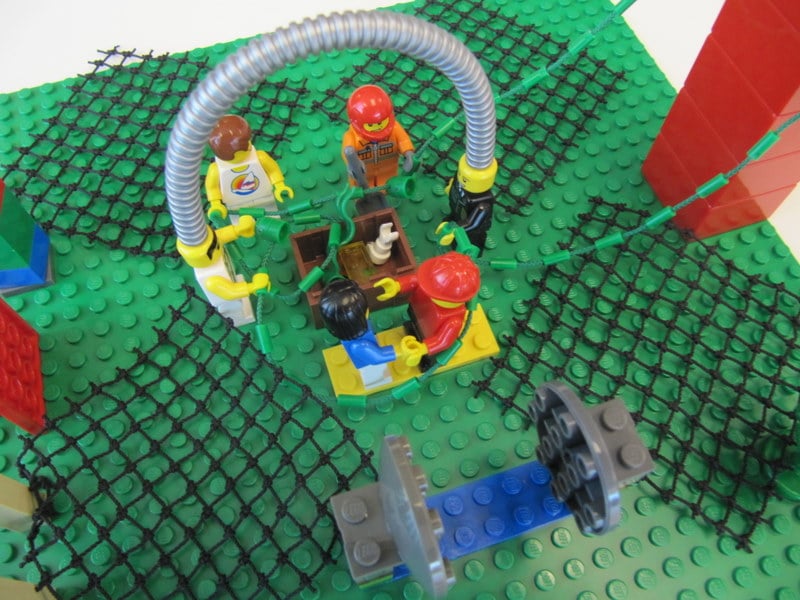
  3. The models and ideas were integrated into a shared model. The results are shown below.

Shared Model from Team 1

Some Notes:

  • Low barriers to entry
  • Transparent
  • A source of ideas (not only source)
  • Listening to outside ideas
  • Building bridges to other communities (PMI, Kanban, etc)
  • Welcome other community members into our community
  • Stepping places for learning and different approaches
  • Many people working to move SA forward with coordination of effort and needs
  • Let go of past
  • Have awesome tools and capabilities within our community

Shared Model from Team 2

Some Notes:

  • Simple machine with inputs and outputs
  • Inputs are multiple communities through individuals and “antennas”
  • Collect ideas in central backlog with adequate levels of transparency
  • Courageous Leadership to move ideas forward
  • Other leaders to spread ideas
  • Assisting people with entry to so they can grow
  • Building bridges with other communities

Discussion

There were a number of key differences between the models.  A few are discussed below.

What kind of leader? The inclusion of the Crown by one group was particularly challenging due to symbolic association to a king and absolute authority. Upon clarification, it was used to represent strong leadership that was inclusive of other voices and opinions. Something more than a facilitator and less than an authority.

What communities? The first group was much more oriented outwards to other parts of the Agile community and even wider. The second was focused more on the different communities or membership within the Scrum Alliance. So, both internal and external stakeholders are important.


Leave a Comment

Scrum Alliance Leadership – Acceptance Tests

This post identifies acceptance tests for successful thought leadership within the Scrum Alliance. See also: Models for Success and Concrete Actions (& Participants)

Process: Everyone built a model for an acceptance test and each group voted to select the two most valuable acceptance tests. So there are four acceptance tests in total.

Acceptance Test #1 – One Leader, one Message & people following

Acceptance Test #2 – Tuned in to community and able to influence it

Acceptance Test #3 – Build bridges between communities

Acceptance Test #4 – Start with one concrete thing supported by multiple communities

Leave a Comment

Agile 2011 Preview – Innovation Games and Strategic Play with Lego

I am heading off to Agile 2011 and I wanted to share why I am really excited to be attending.  It’s really all about the power of play.

Understanding Flow through Games

I was fortunate to be accepted to the Agile Bootcamp track to present Lean Fundementals: Understanding Flow through games. I am thrilled since this touches on two passions of mine – Lean/Flow thinking and using games for learning.

Strategic Play® with Lego® for Solving Serious Problems

I am going to run two open jam sessions (each with a maximum of 14 participants) to use  Strategic Play® with Lego®  to solve some serious problems or build a shared vision. I will announce the times via twitter (follow-me) and also using the open jam board.

One of these will be focussed on generating leadership ideas for the Scrum Alliance. Some example acceptance tests for leadership are:

  • There is a clear compelling vision of the Scrum Alliance that is supported by 70% of the membership.
  • Satisfaction with leadership in Scrum Alliance is high. (e..g more than 4 out of 5 on survey).
  • Public perception of the Scrum Alliance is positive.
  • Members feel like their voice is heard regarding key decisions.


Innovation Games® T-Shirt Contest

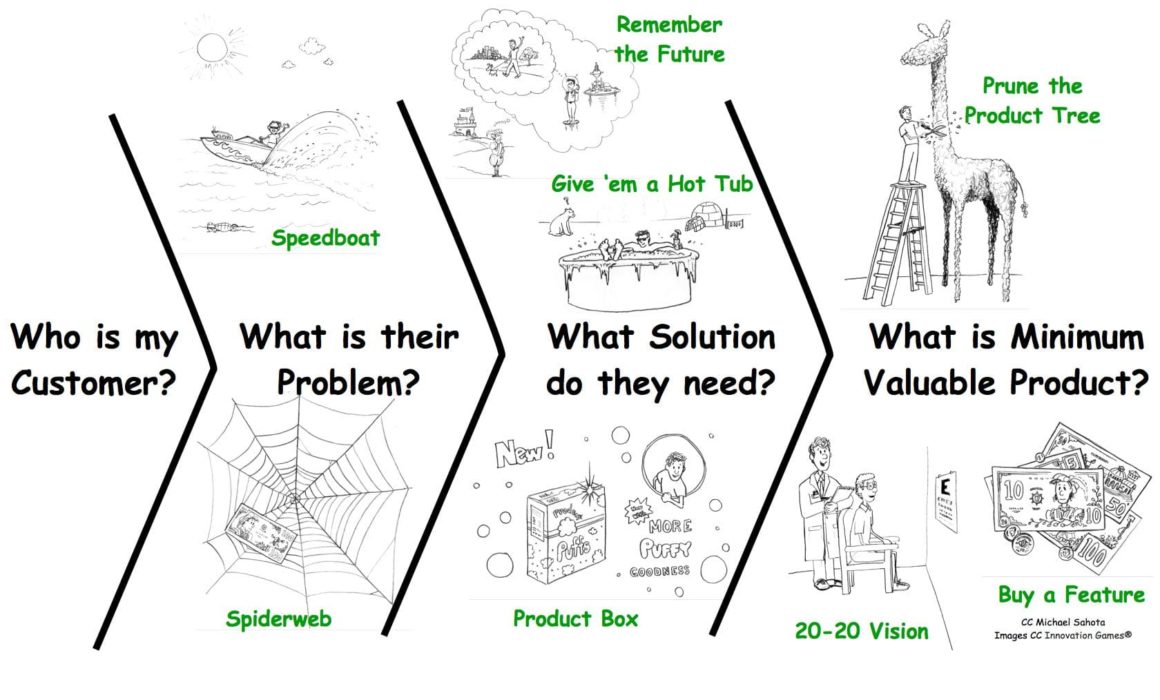
You probably already know that Innovation Games® are amazingly powerful for supporting Product Owner/Manager communication and discovery with customers and stakeholders.

What you may not know is that there is a game at Agile 2011 for promoting awareness about Innovation Games® using a photo contest. Get your picture with me and other trained facilitators to win cold hard cash. I am very excited to participate and am bringing my two t-shirts. See front and back below. Sadly, my new tshirt did not get here in time…

Tasty Cupcakes – Game on!

I have been working with Mike McCollough and Don McGreal to accelerate tastycupcakes.org as the destination site to find and share games for learning about Agile and for games that do valuable work.

Games provide a way for people to play to get outstanding business results or accelerated learning.  Spot me wearing a TastyCupcakes tshirt and I’ll help you find the game for you!

Coach’s Corner

As a Certified Scrum Coach I thought I would pay it forward by participating in the Coach’s Corner to help coaches.

If you were thinking that this is not about play or games, well either you are right or life itself is a game. A collaborative one.

My office hours are:

  • Monday 8am-9am
  • Thursday 5pm to 7pm
  • Friday 8am-9am


Leave a Comment

StrategicPlay® with Lego® SERIOUS PLAY® – Creative, Collaborative Solving of Wicked Problems

StrategicPlay® with Lego® SERIOUS PLAY® is a powerful experiential tool to enhance innovation and business results. This post provides a brief introduction to summarize what I learned when I attended the amazingly good facilitator training with Jacqueline Lloyd Smith last month.

Understand Complex Problems

For me, the heart of StrategicPlay® is that is brilliantly assists a group to create a shared understanding of complex problems and of each other. Consider the complex model constructed below that was evolved iteratively over the course of the day through phases of building, storytelling, and integration. The physical model has no inherent value – it is the meaning the participant place on it, the decisions, and mental models that matter.

Applications and How it Works

Consider the diagram below. The ovals identify some typical applications of StrategicPlay® and below them you can see the mechanisms used to achieve these results.

At it’s most basic, StrategicPlay® is a facilitation tool. Other facilitation tools are sticky notes, GameStorming, and Visual Facilitation.

Why it Works

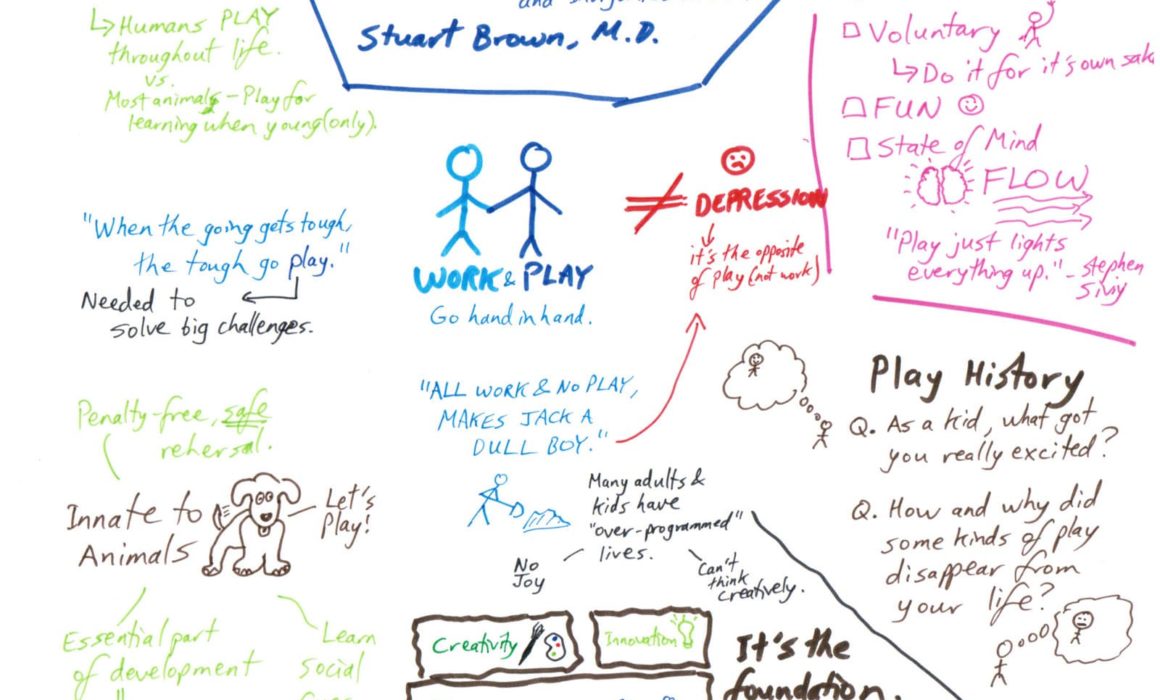
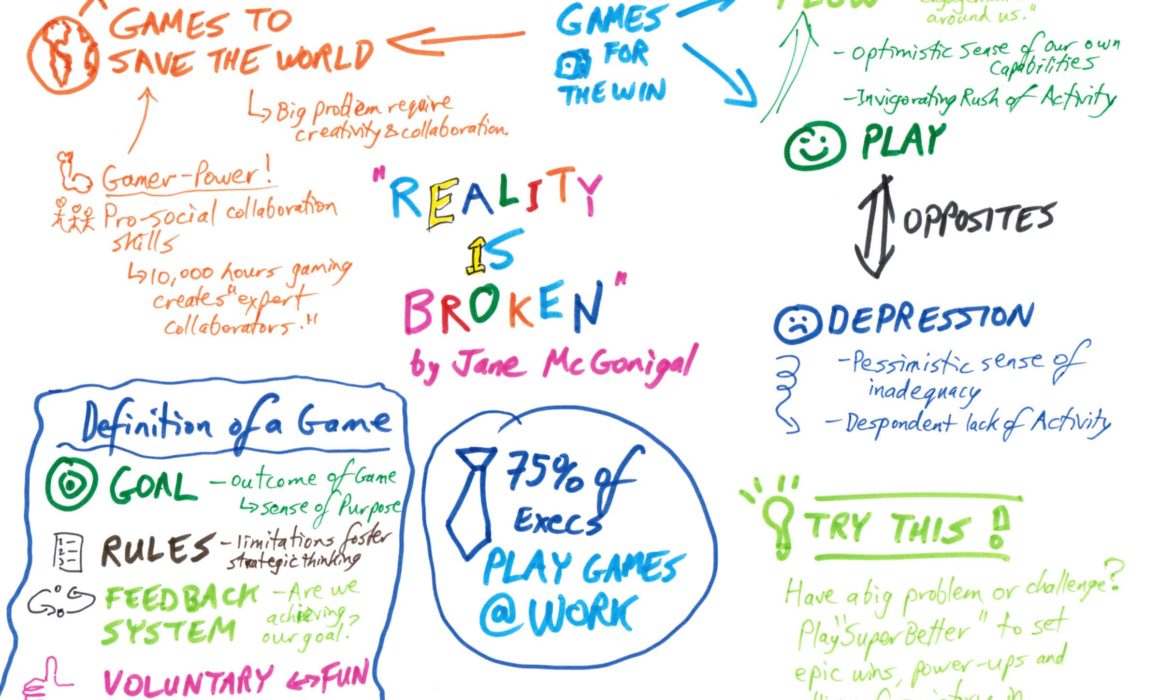
Below are some of the key reasons why StrategicPlay® works so well. Please read it (click to for full-size picture) as there is too much good stuff to summarize. (If you want a screencast, let me know by twitter or comments).

StrategicPlay® is based on research that shows that this kind of hands-on, minds-on learning produces a deeper, more meaningful understanding of the world and its possibilities. It creates the perfect storm by engaging the brain, body, and emotions of the participants.

On the right is a crazy picture of a homunculus to help you connect with some of the research. This how psychologists believe our brain is connected with our body. Notice that connections with hands is disproportionately large – when we use our hands, we can use more of our brain. We are wired for using our hands, not for sitting around a table talking.

Where did this stuff come from?

Starting in 1999, the Lego® company worked with business consultants and psychologists to solve their own problem of developing and effective company strategy. The outcome was the invention of Lego® SERIOUS PLAY® which was made open source in in June, 2010. StrategicPlay® was created to develop new applications and train facilitators. If you are curious, check out this presentation on the History and Evolution of StrategicPlay®. You may also want to get Katrin Elster’s view on How and Why StrategicPlay® works.

Wow! This is Cool! What’s next?

Good news is that this is really powerful. The bad news is that this is a complex tool and requires significant investment.

It’s not like a lot of Agile games where you check out a recipe on TastyCupcakes.org and then you just do it. Sadly, you can’t just dump a bag of random Lego® pieces on the table and expect results.

So here is how to get started:

  1. If you have never had a chance to experience StrategicPlay®, then that’s the first step. You need to get your own sense of how cool this really is. Ask me or another StrategicPlay® facilitator to give an introductory session in our home town or at a conference.
  2. Get training in North America (where I went) or in Europe.
  3. Buy specially designed Lego® kits. Yeah, they’re expensive and you need ‘em.

Comments (4)

Three Ways to Use Play for Business Results

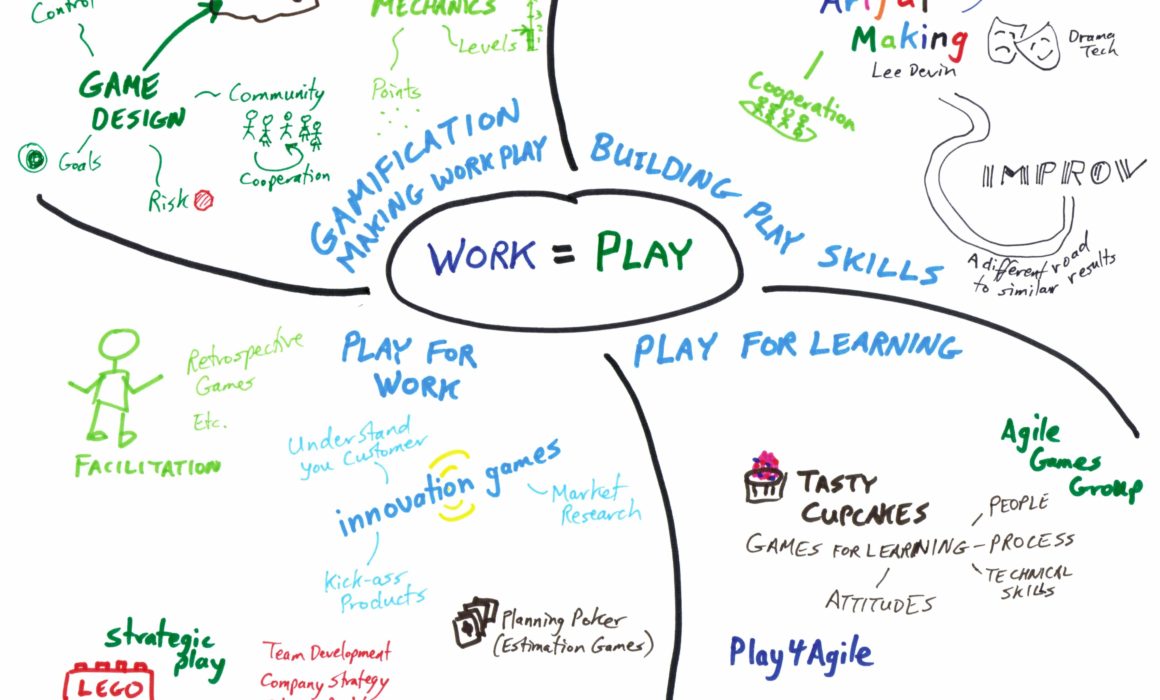
Play is a profoundly powerful tool for achieving business results. I think of three main ways to accomplish this: Using explicit play to do work, using play for learning, and building people’s play muscles.

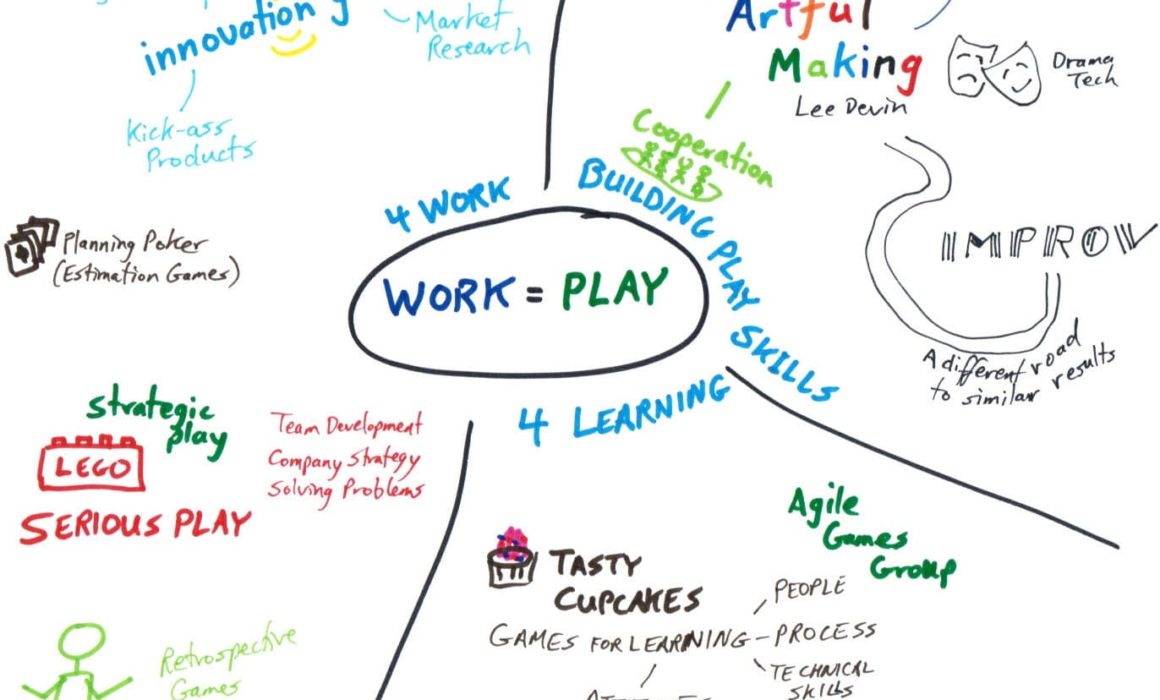
Consider the following diagram:

Play for Work

The goal is here is to take difficult, boring, unproductive work  and create great results through play. In the diagram, I give a few examples of how to make work through play:

  • Innovation Games® have a proven track record of using play to help companies understand their customers and build innovative products.
  • Planning Poker is a well-established team based estimation technique that is now complemented by other estimation games.
  • Lego® Strategic Play® is a hands-on activity for solving tough problems, team development and creating company strategy.
  • The world of facilitation provides a host of engaging activities from team retrospectives to Open Space.

For more information, check out some ways I help clients with bring play to work.

Play for Learning

I have been very involved in games to assist people learning about Agile, Lean, etc. I made a helpful diagram that shows different types of games and what they can be used for. Probably the best place to go to find a game is TastyCupcakes.org – it’s a community-driven and has an ever-growing collection of games. I even volunteer my time to make it better for everyone – that’s how much I care and believe in play as a powerful dynamic.

Of course, play goes well beyond Agile through folks such as training master Thiagi and GameStorming. (Both are on my to-learn list)

Building Play Skills

What if you want to build the skills of your team or organization to harness play as part of daily work? To have play and creativity permeate everyone and everything? For this, your best bet comes from dramatic techniques such as ArtfulMaking and DramaTech. Also, strongly recommended are Improv skills. You may notice that these are not just about creativity, they are also about listening and collaboration as an added bonus.

For results, play on!

Leave a Comment

Play with Lego for Strategic Results

At XPDays Benelux I was fortunate to accidentally attended Agile Community Vision with StrategicPlay by Olaf Lewitz and Yves Hanoulle. If you are curious how you can use Lego to achieve strategic results, read on.

Ideal Team Member

One of the exercises was for each participant to build an identical turtle from a kit using instructions. We were told that the turtle represented an ideal member of a team and ask to add one part that represented what we thought was important. In my case, I picked a flower (see photo on right). For me the flower stands for individualism that is needed to have a strong team. I am sad I did not video record my explanation or take notes since I can’t re-access the profound insight I had when created my model.

You can also see all the turtles that the group created in the photo below. Even though some us picked the same Lego piece to add, the location and narration of the meanings were quite different. So, in this case you really need to hear the debrief to understand the meaning.

Agile Community Vision

The next exercise was for each of us to build our vision of the Agile Community using a large collection of Lego without talking. After building, we took turns debriefing. You can see the different models that people created below. Mine is the one in the foreground with a tall antenna and bridges to other communities. As I went through the exercise, I found that I was learning things about myself. This can be a very revealing exercise.

Check out a very short video where I explain my model.

Shared Agile Community Vision

In the next exercise we built a shared vision that incorporated ideas from the individually created models. As we did this we clarified and enriched our metaphors. It was a very interesting social/team exercise to work through the ideas.

There was only one rule to guide us: everyone had to feel comfortable with the model. If there was a part that did not work for them, we were to remove it.

Here is a short video where we took turns explaining parts of the model:

Comments (2)